

By Gideon Koros
As the country gears up for the 2027 General Election, the urgent need for enhanced civic education has taken center stage. For years, young people have been sidelined from leadership positions due to systemic barriers and a lack of proper channels to propel them into elective office.
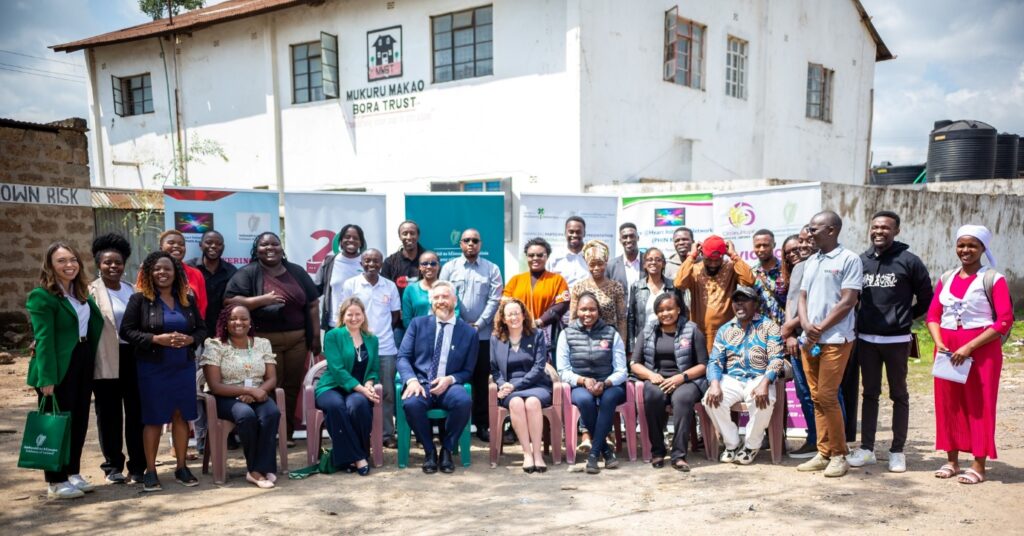
Image Courtesy: Irish Minister Christopher O’Sullivan, T.D., and Ireland’s Ambassador to Kenya, Caitríona Ingoldsby, pose with Mukuru kwa Njenga community members.
The historical June 2024 demonstrations, spearheaded by Gen Z, served as a turning point. Initially sparked by opposition to the 2024 Finance Bill, the protests quickly evolved into nationwide demands for economic relief, anti-corruption measures, government accountability, job creation, and improved social services. Tragically, several young people lost their lives, and hundreds were injured. These unprecedented events raised a critical question: Is there adequate civic education in Kenya?
In response to concerns about low civic engagement, Irish Minister Christopher O’Sullivan, T.D., alongside Ireland’s Ambassador to Kenya, Caitríona Ingoldsby, recently met with youth leaders at Mukuru Kwa Njenga. Hosted by the Makao Bora Trust in Nairobi, the session featured a roundtable discussion on youth civic engagement.
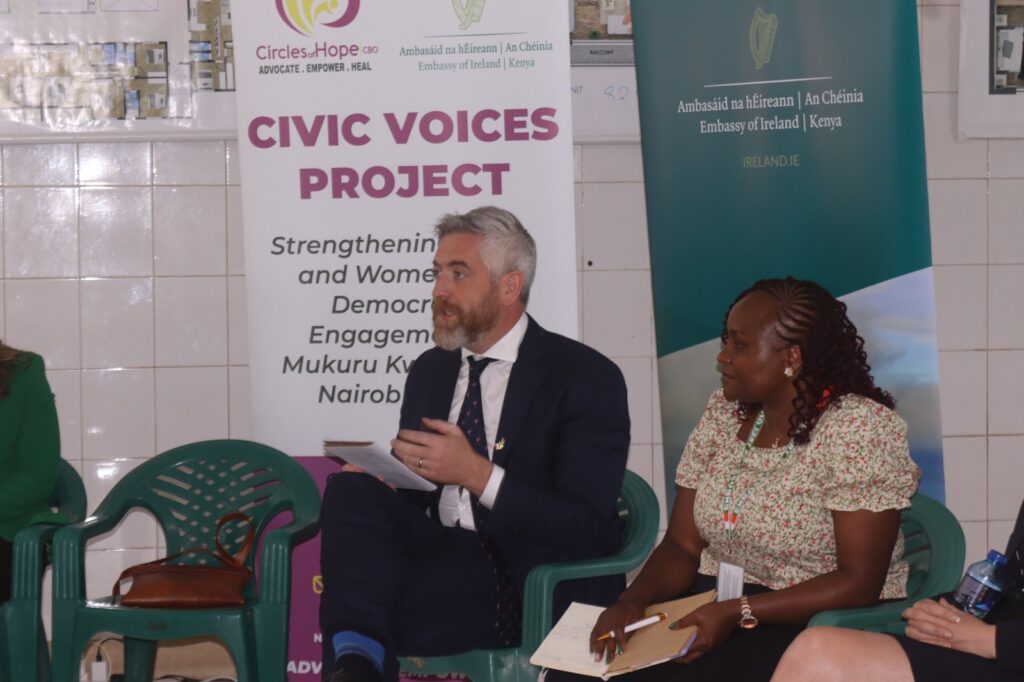
Image Courtesy: Irish Minister Christopher O’Sullivan, T.D., leading a discussion on civic engagement, land and housing rights, climate issues, and the inclusion of women.
The dialogue focused heavily on land and housing rights, climate and environmental issues, and the urgent need for the inclusion of women, youth, and persons with disabilities in governance ahead of the 2027 polls.
Since the 2024 protests, youth activism in Kenya has evolved into broader, highly organized civic movements. Initiatives such as #TukoKadi and Bunge Mashinani have transformed voter registration from a mundane civic duty into a cultural trend. These grassroots campaigns have been instrumental in educating the public on the importance of registering as voters and actively participating in democratic processes.
The roundtable provided a platform for youth-led groups, including Circle of Hope and Bunge Mashinani, to track their impact and share strategies for expanding civic engagement. This push is crucial in a country where the youth (ages 18–34) make up nearly 75% of the population, yet accounted for only 39.8% of registered voters in 2022—a significant drop from over 45% in 2017.
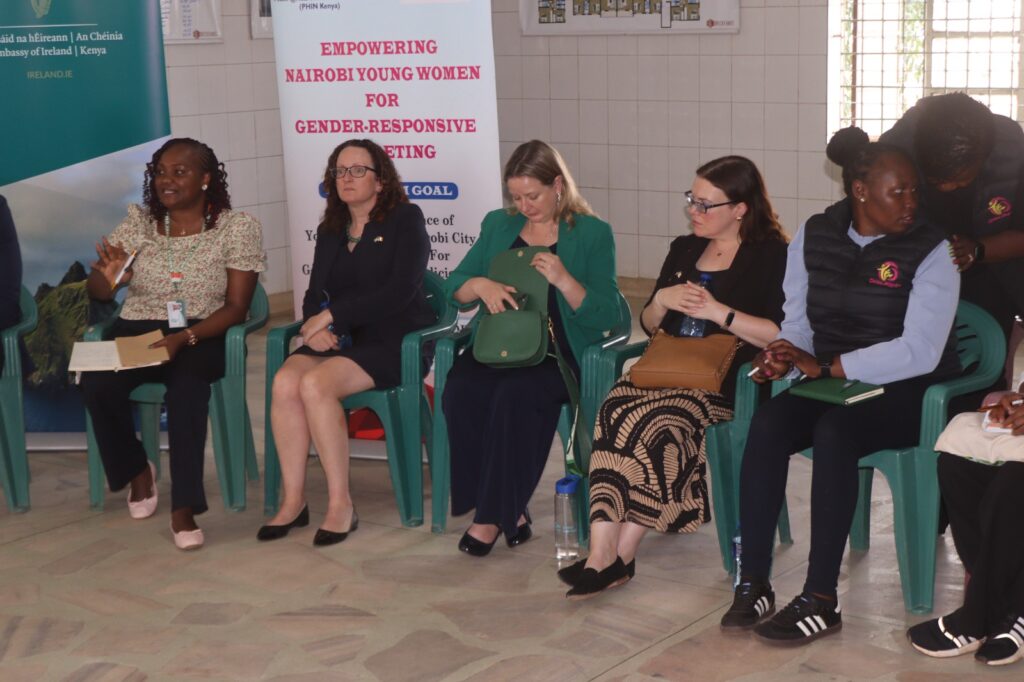
Image Courtesy: Irish Minister Christopher O’Sullivan, T.D., and Ambassador Caitríona Ingoldsby engaging with local civic educators.
The dialogue allowed the Irish delegation to engage directly with young activists passionate about educating their peers and lobbying for more inclusive budgeting decisions. During the forum, civic groups raised alarm over the persistent neglect, misrepresentation, and misappropriation of public funds by elected leaders once they assume office, calling for actionable measures to hold leaders accountable.
Addressing the forum, Minister O’Sullivan challenged the youth to leverage their power in numbers to elect leaders who genuinely represent their interests. He emphasized that democracy offers them a tangible opportunity to shape their own future and demand accountability.
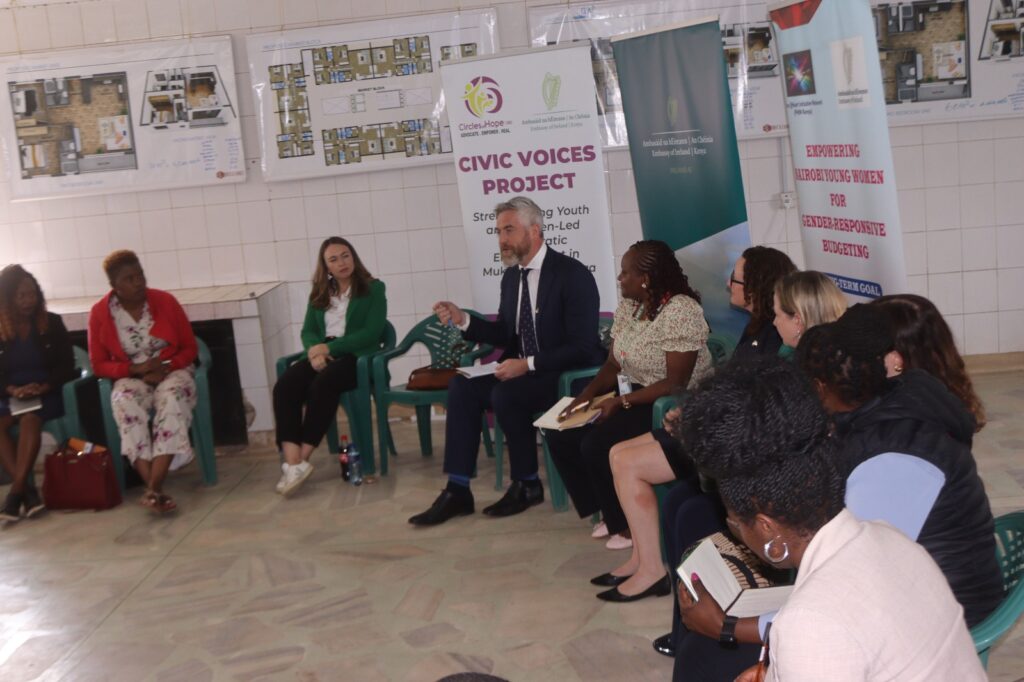
Image Courtesy: Minister Christopher O’Sullivan sharing insights with civic educators in Mukuru kwa Njenga.
Historically, Kenyan youth have experienced high levels of voter apathy due to disillusionment with the political class, economic struggles, and the pervasive belief that their votes do not change outcomes. Despite being the largest demographic, many have felt disconnected from formal political processes.
Today, however, a renewed call to action is echoing across informal settlements and urban centers alike: the youth must rise, register, and vote to reclaim their future.
