

By Evans Kibe
Data from the African Population and Health Research Center (APHRC) indicates that approximately 50% of children in Nairobi’s informal settlements lack access to free public primary education. Consequently, up to 63% are forced to attend under-resourced informal facilities and low-fee private schools.
These affected children face severe barriers to learning, including extreme poverty, inability to pay school fees, and highly unconducive learning environments. Furthermore, poor sanitation in these areas exposes them to life-threatening waterborne and environmental diseases such as cholera, bilharzia, and pneumonia.
This devastating reality is evident at the Excel Mariam Star Education Center, located in the Kawangware slum of Dagoretti North Constituency, Nairobi County. The center, which hosts an estimated 120 pupils from low-income families, is in dire need of funding from donors and well-wishers to sustain the education of children who still believe that school is the great equalizer.
Speaking to the Mtaani Radio news desk, Frederick Muhandachi, the Center’s Executive Director, stated that securing a future for these children through education is his life’s mission.
For the center to navigate these hurdles and secure quality education for the most needy, Muhandachi challenged the public to view the education of children in slums as a shared responsibility. He called on the community and well-wishers to join hands in supporting the area’s most vulnerable learners, maintaining that the right to education is a fundamental social right guaranteed under Article 43 of the Kenyan Constitution.
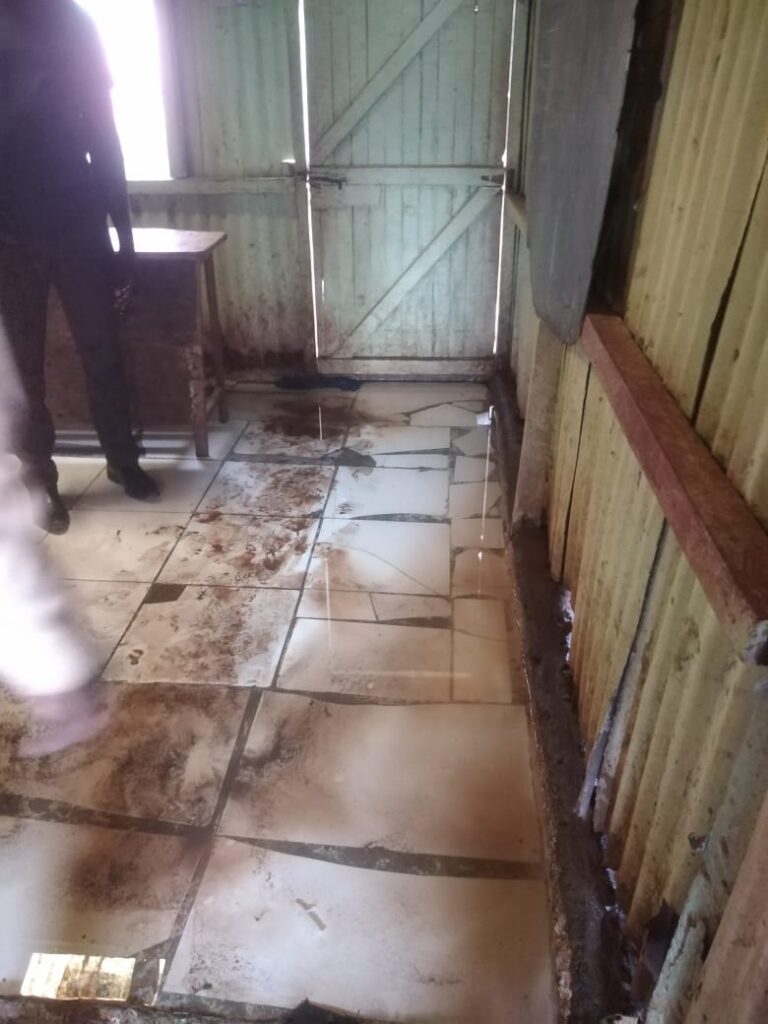
Touching on the infrastructural challenges undermining the daily running of the center, especially during the current rainy season, Muhandachi cited a severe lack of finances to construct standard classrooms, a shortage of playing grounds, and inadequate learning equipment. He appealed for meaningful donor funding and urged the Ministry of Education and other stakeholders to intervene.
His counterpart, Stanley Shivonjo, put the crisis into perspective by revealing that learning programs have recently been disrupted by stormwater flooding their classrooms. He termed the situation a severe health hazard, exposing the young learners to contaminated water and related diseases like cholera.
Shivonjo pleaded with the Nairobi County Government’s Department of Environment, in collaboration with the Ministry of Health, to ensure that the environment surrounding schools is maintained to the highest sanitation standards. He noted that the school currently lacks the financial capital to handle medical emergencies should an outbreak occur. Furthermore, he cautioned the area Member of County Assembly (MCA) to step up and upgrade the local drainage systems to stop contaminated water from overflowing into the center’s premises.
Responding to the school’s ongoing struggles, Hamideh Hashemi, a potential donor, recently visited the center to fast-track the urgent needs her organization can address. Speaking to our news desk, Hamideh stated that her support stems from a goodwill commitment to vulnerable families, whom she assists in and out of season.
As a close partner to several community institutions, Hamideh highlighted the underlying systemic challenges facing children in informal settlements. She told Mtaani Radio that poor school infrastructure, a lack of human capital, and general negligence from government institutions remain the biggest hurdles for these learners. Currently, she noted that the Excel Mariam Star Education Center urgently requires funds to construct more classrooms, pay teachers’ salaries, and purchase basic learning materials like books and chalk.
Beyond financial aid, Hamideh emphasized that her organization also offers psychosocial support to children facing life’s bitter realities, with a strong focus on moral development. For children with disabilities, her organization provides specialized care and works with parents and the surrounding community to end the discrimination and myths associated with disabilities.
Bearing in mind the heavy economic burden facing slum families, Hamideh welcomed other philanthropists to step in and support the education of the economically marginalized.
This appeal comes against the backdrop of a previous directive by President William Ruto, who had threatened to close unregulated children’s homes and centers, citing the poor handling of orphans and neglected children in society.
While the abrupt directive was met with public outcry and stalled, the State Department for Social Protection continues to demand specialized and standard handling of children from informal settlements. Meanwhile, civil society groups, children’s officers, and human rights defenders continue to agitate for the full implementation of Article 43 of the Kenyan Constitution, which guarantees every citizen the right to education, attainable high standards of health, accessible housing, safe water, and social security.